Wednesday, January 11, 2017

Hiking in Surrey - Denbies Vineyard

A vineyard in the south east of England? Sure,why not? And if 265 acres of grape vines on the gentle slopes of the hills around you are not a good enough view, why not climb the said hill!


And be sure to say "Hiya" to some sturdy Galloways and resting sheep as you take in the magnificent view.


Hiking in Surrey - Box Hill

     'Leafy Surrey' as it is known in England is an area of rolling chalk downs, ancient woodlands, canals, rivers and impeccably landscaped gardens. With woodlands covering over a fifth of its area, Surrey has the honor of being the most wooded county in England. Hence, this is the ideal place to indulge in one of the great English past times - all weather Walking. Whether by themselves, in groups or with their furry four-legged companions. the English love to walk. The hikers, the Ramblers and even the runners - this beautiful countryside beckons them all. 

Box Hill and Stepping Stones Pub walk
     Box Hill is a summit in the North Downs, with a maximum elevation of 735 feet. Lying within the Surrey Hills Area of Outstanding Natural Beauty (AONB), these chalk slopes support over 40 species of trees and wildlife. If you are brave enough to climb the hill, which featured in the 2012 Summer Olympics cycling road race events, you will be rewarded with panoramic views of the English country side that you could only have imagined, as a teenager, reading Thomas Hardy.  


The quaint little pub at the end of the walk is no small consolation either.

Monday, September 12, 2016

One month Anniversary

‘Congratulations!” I chirped, as my husband was getting dressed.
"Congrats to you, too", he replied. But as he turned to me, I saw him thinking.. What date is it? Congrats for what? Anniversary? Something about the kids?
"It is our one month anniversary today. One month in UK,"I chuckled.
"That's right! It has been a month already, hasn't it?"

Day 31 of our Year in UK. The month flew by fast. Moving into the flat in Surrey, settling in with school schedules and exploring the country on weekends had left us in a whirlwind. As I sit down to think about the bygone month, there is so much that comes to mind that I will split this post into two parts. Here is Part One.

The first thing that comes to mind when you hear the name United Kingdom is its greatest import - the English language. A year spent immersed in the Queen's English, to hear what has become my de-facto mother tongue being spoken in its 'native' form, by the people who claim to have invented it, was a dream come true. And I am enjoying every moment of it. How can you not swoon when you hear the morning news anchors say churlish or peripatetic, when you are asked very politely to wait whilst your order is being processed and your Amazon Prime order is dispatched within a few hours to be delivered by the Royal Mail. The cable TV technician waves a cheery Cheers just as the well meaning neighbor asks, "How are you getting on, then?", the pitch of her voice climbing melodically with every word and the question mark, just breaking off to float silently down to the ground?

And it is not just the way they speak. The British have a penchant for naming things. My personal favorite, the inimitable Bill Bryson wrote,"At a minimum the name should puzzle foreigners-this is a basic requirement of most British institutions-and ideally it should excite long and inconclusive debate, defy all logical explanation, and evoke images that border on the surreal.” The naming skills apply to all walks of British life. For example, at the local pub, you can order black pudding, Hog pudding or kippers; pasty, steak and kidney pie or plain old Victoria sponge.  Welsh rabbit, Toad in the hole or Spotted Dick are nothing like you would imagine them to be. However, you will not go wrong with the ubiquitous fish and chips - the freshest fish fried in the lightest batter and thick cut chips slathered with malt vinegar or the generous Sunday roast -with its roast lamb and Yorkshire pudding (which is not a pudding by a long stretch) with Sticky toffee pudding and Devonshire Cream. An afternoon delight - fragrant warm black tea, served in a cup and saucer with a small scone, biscuit or a slice of cake. And then there is the beer. Unlike its Belgian cousins, the English brew is lighter in taste and calories so you end up drinking a lot more than you should. And it is not your fault, really. Inviting building claiming to be 'free houses' are open day and (most of) night at every corner. With names like The Bricklayers Arms, The Waterman's Arms, The Queen's Head, The Pyrotechnist's Arms, The Hung, Drawn and Quartered, The Drunken Duck, The Fighting Cocks, The Pig and The Goose or Ye Olde Cheshire cheese, there is always a place to throw back a pint or two.

As you drive out of London on the notorious M25, the landscape changes from stone, glass and concrete to rolling hills and grasslands. The green you see through the window is fresher, deeper,and crisper than anywhere else. The ever-present cool island breeze carries with it a damp freshness that sustains Mother Nature at her very best. The citizens of this nation take their role as care-takers of their surroundings very seriously. The National Trust, The Wildlife Trust and National Nature Reserves are just some of the organizations that work to conserve, protect and promote the 94,00 odd square miles of mountains, meadows and water bodies on this island.  Buildings of limestone, Portland stone and sandstone adorned with slate roof or tiles stand in harmony with miles of heathland sprouting heather and gorse, grounded by beech, silver birch, oaks and rowan trees laden with cheery red clusters. Rivers, streams, lakes and shallow ponds store the plentiful rainwater and nourish the vegetation all around. Modern  buidlings made of glass, stone, stucco or red bricks are spoilt for choice as they draw on inspiration from centuries of different styles of architecture.
                 

Though nature is allowed to run wild, the British gardens are anything but. Symmetrical flower beds, with plants arranged in order of height or varying shades of foliage are encircled by tight stone walls. Hedges are pruned with surgical precision whether they are inside the garden or lining the narrow winding streets that pass through lush rolling hills where sheep and cows graze all day. Perhaps, this is what he was describing when Shakespeare wrote :

“This royal throne of kings, this sceptered isle,
This earth of majesty, this seat of Mars,
This other Eden, demi-paradise,
This fortress built by Nature for herself
Against infection and the hand of war,
This happy breed of men, this little world,
This precious stone set in the silver sea.” 

Tuesday, August 16, 2016

Moving Day...again.

A gentle breeze is playing with the leaves of the ash tree while somewhere above, a pigeon is cooing contently. It is 3 o'clock in the afternoon and I'm sitting at the kitchen table, sipping a cup of Twinings Tea.  If you walked into the house right now, you would think we had lived here for years. The truth is, we moved in just three days ago.

Having enjoyed our intial days as tourists in hotels in Central London, we were getting restless for space. The novelty of living out of suitcases and searching for new restaurants for every meal was wearing off. Since we had already received the keys to the flat, we decided to move in one day ahead of schedule. We had opted for a fully furnished flat instead of a bigger house considering the temporary nature of our stay here. In many ways, this move was not the same as all of the earlier ones. And there have ben quiet a few of those.

Moving has become a recurring event in our family. When we meet new people and talk about our past, the seven towns we have lived in and stories about our moves become engaging topics of conversation. Since the first move from India to the US, with only the proverbial suitcases in hand,  we found ourselves packing and moving every 2-3 years. We have lived on the western and eastern coasts of US and also the mid-west.  We moved across continents for a two year stint in India, before coming back to the US and now, we are here in the United Kingdom. When we bought our first house, we moved all our possessions with the help of some well meaning friends and Subway sandwiches. As the years went by, things started adding up. We have moved our belongings on an 18 wheeler truck across the country, in a giant container on a ship to India and this time in sturdy cardboard boxes for air cargo.

This move feels different; temporary and liberating. We have a timeline here and all decisions are based on that. We are not looking to settle down in the best house we can buy and decorate it with our style of furniture and appliances. We need the essentials to cook, clean and live comfortably for one year and plan all the trips we can possibly take. So, we brought pillows and comforters and toys with us so that we would have some familiar things from 'home' and ordered the rest on Amazon. This feels like an extended sleep-over. Settling in did not take more than a weekend.

My family moved a lot when I was a child. I did not grow up in the town I was born in. In fact, I did not live there till I turned 16. Living in different states with different cultures and languages made me appreciate the diversity in Indians. I became fluent in 5 languages. I don't have trouble talking to strangers or making friends. A life like this makes you a constant traveler and that helps you take risks, give people more leeway than you normally would and hence be less judgmental. Great for forming relationships!

However, I miss the feeling of belonging to a place. I am jealous of people who can call themselves native Punekars, or New Yorkers. I have roots but they are aerial, branching out in search of light and water and thriving wherever they find it.  I am from nowhere yet I belong everywhere. Maybe that is why I try to live each day the best I can because I don't know when and where I will move to next.


Wednesday, August 3, 2016

Day 2


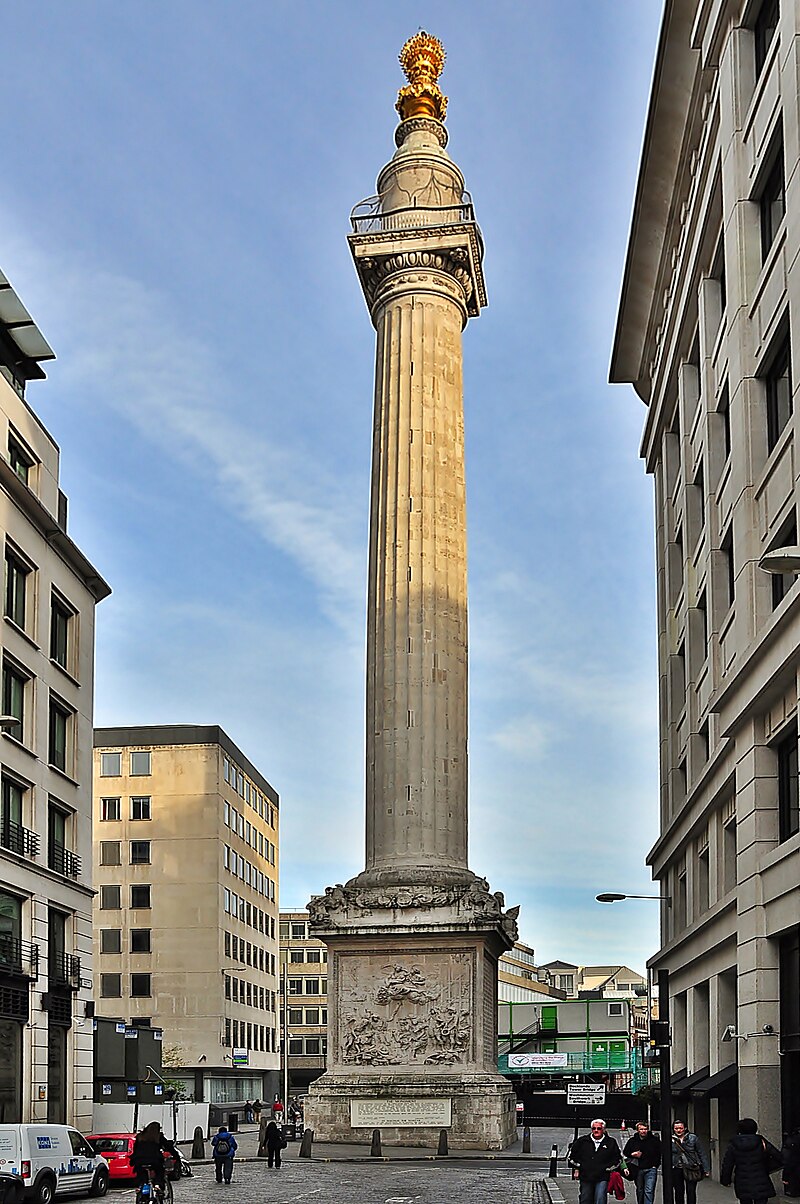
The narrative of the history of London as a metropolis has three bold points: the Great Fire of 1666, the Great war (World War I) and World War II. These were events when not only was the city rebuilt  but it was also redefined. There is evidence of that grit in the architecture of this city throughout. Sir Christopher Wren was the principal architect in the rebuilding of the city after the Fire.  A permanent monument that he designed stands close to where the Great Fire started and devoured the entire city in 4 short days.  The Monument is a fluted Doric column built of Portland stone, topped by a gilded flaming urn. It stands at 202 feet, the exact distance between this site and Pudding Lane where the fire began. You can climb the 311 steps on the narrow winding staircase to the top but we decided to pass and move on to next line in our itinerary.

Walking over from the Monument, we made our way to the Tower. The famed Tower of London is an imposing castle built by William the Conqueror around the end of 1066 on the banks of the majestic Thames. Most people recognize this landmark as the infamous prison where Anne Boleyn, Sir Thomas Moore and Oliver Cromwell were held captive and later executed. We took an hour long guided tour led by Andy, one of the 38 Yeoman Warders who lives in the Tower. He was loud, brash, funny and very informative. He helped us get oriented to the layout as well as to the history of the Tower. After getting a lot of information which included the definition of what exactly it meant to be “hanged, drawn and quartered" or what your days would entail if you were imprisoned in the Tower, we were left to explore the rest of the complex on our own. The White Tower, an imposing medieval palace built in the 11th century is still used as an Archive and storage for the Royal Armory. It has permanent exhibitions featuring arms and ammunitions used by the monarchs over the years. I found this to be an ingenious use of historic buildings, not common in other parts of Europe. Instead of locking up buildings as historic in the interest of conservation, the old  buildings in London are retro-fitted and used, thereby ensuring their regular upkeep and maintenance. 

The piece de resistance of the day was of course the Crown Jewels, housed in the Jewel house. The exhibition features the jewels and ceremonial pieces like sword, scepter and orb used by different English monarchs. The one we wanted to see was at the end of the tour. The Kohinoor diamond, that sits atop the Crown used by the current monarch EIIR - Elizabeth II Regina (the official Latin name for Queen Elizabeth II). Even as school children, all Indians are told that among all the treasures looted by the British during the Raj,  the Kohinoor diamond was the most precious. Seeing it in real-life, however  in a bombproof glass case, studded in a velvet purple crown, along with other precious stones, it feels underwhelming.This is a piece of rock, shinier than others lying next to it in the bowels of the Earth, found and given a high value by men. Sure, this has come from the Kakatiya dynasty in Hyderabad by way of Babur and countless other hands, but what exactly gives it any value? Wars were fought over these and other shiny baubles? What a waste!


Our day of discovery of the system of the English Monarchy ended at the Tower Bridge or the London  Bridge. It was day spent in reflection and deep appreciation for the respect that modern-day Britons have for their monarch and tradition which allows the monarchy to exist in this modern Republic. 


Tuesday, August 2, 2016

Day 1


London is a blur of grand Victorian buildings next to towering facades of glass and steel. People are always walking here-walking fast and with a purpose. Smartly dressed women who can rock culottes or red canvas shoes and confident men wearing sharp blue suits or pink shorts walk on narrow pavements - some on their phones, some chatting with friends and a lot of them, smoking. Tourists stop every now and then to marvel at the sights and take selfies. The red double decker buses make impossible turns through narrow streets that make taxis and cars envious. Every few blocks the Roundel announces the entrance to the lifeline of London, the Underground or the Tube as it is fondly called, to stations like Charing Cross Road, Piccadilly Circus, Marylebone, Embankment and Westminster. Restaurants, boutiques, brand name stores from all over the world, bespoke tailors and robe makers, hat stores and off-licenses all buzz with activity. 

As we make our way through the tourist highlights and learn how to eventually become residents, I invite you to come along on this adventure with me. Through these posts, you will experience the thrill and trials of an ex-pat family making their life in a new land, as well as learn some tips and tricks that you can use as travelers anywhere in the world. Check out the pages Tips for Travelers, London Checklist and Restaurant Reviews for practical information you can use and other stuff that will just convey my excitement and awe.


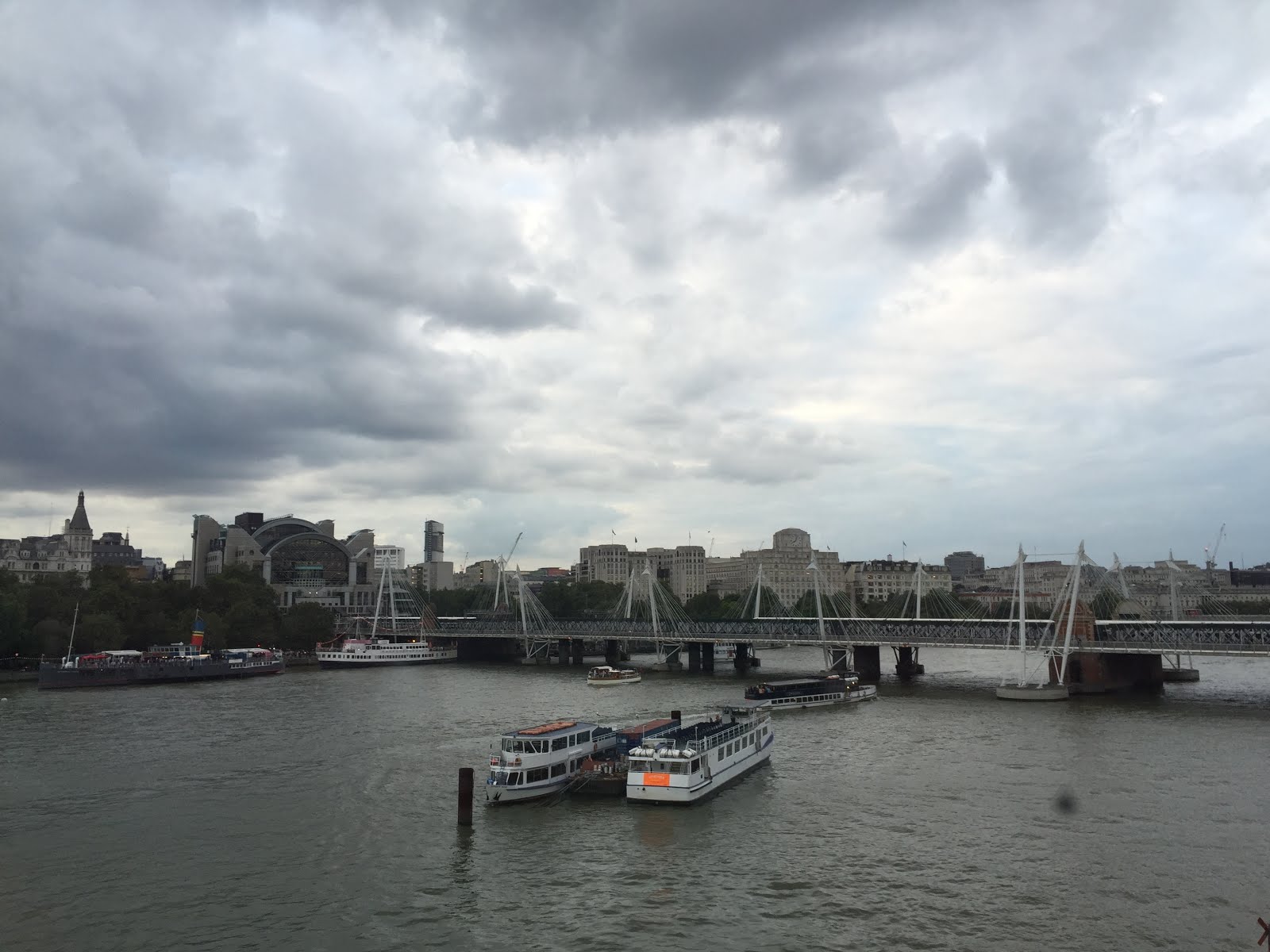
First, we start the tourist phase of our year in the United Kingdom. It took us two days of sleeping until 10 am to get rid of the jet lag. Arming ourselves with the Tube maps and Oyster Cards, we set out to explore this gem of a city. We joined the Londoners and tourists on their streets, walking on roads marked ‘look right’ or ‘look left’ right on the road at every intersection.  We took the Tube, ‘minding the gap’ and got off at Bond street station. This exits out to the fashionable Bond and Oxford Streets, throbbing with hundreds of  shoppers. The smaller streets off these two streets house some of London’s most expensive real estate. Red plaster buildings established in 1869, Victorian brick buildings adorned with iron-work on balconies sporting blue plaques  saying “ Man of Science Thomas Young lived here 1773-1829” and posh modern buildings of glass all stand side by side. With a little shopping out of the way, we were out of this area and on to see the most touristy of all London sights - the London eye. The London Eye is a mechanical marvel and it certainly looks like it. At an impressive 443 feet, it stands as Europe’s tallest Ferris wheel and awe-struck tourists sit in glass capsules as the wheel moves at 0.6 miles per hour. One rotation of the wheel takes about 30 minutes and it is good way to see the city’s crowded landscape from a different vantage point. We had bought standard tickets online but that did not save us much time as we still had to go through security. 
   
On the day we visited, true to London weather, the skies were cloudy and gray but we got a really good view. It is a fun activity to do with the kids.